Integrating HubSpot – CRM
Written By Stefan S.
Last updated 9 months ago

In this tutorial, learn how to integrate with HubSpot’s CRM service using PayKickstart’s API integration.
PayKickstart integrates with HubSpot to automatically create and/or update deals based on customer action events in PayKickstart.
NOTE: You must first have an active PayKickstart vendor account and an active HubSpot account.
Step 1: Access the Configure → Integrations section
Step 1: Access the Configure → Integrations section
In your PayKickstart account, go to Configure → Integrations.
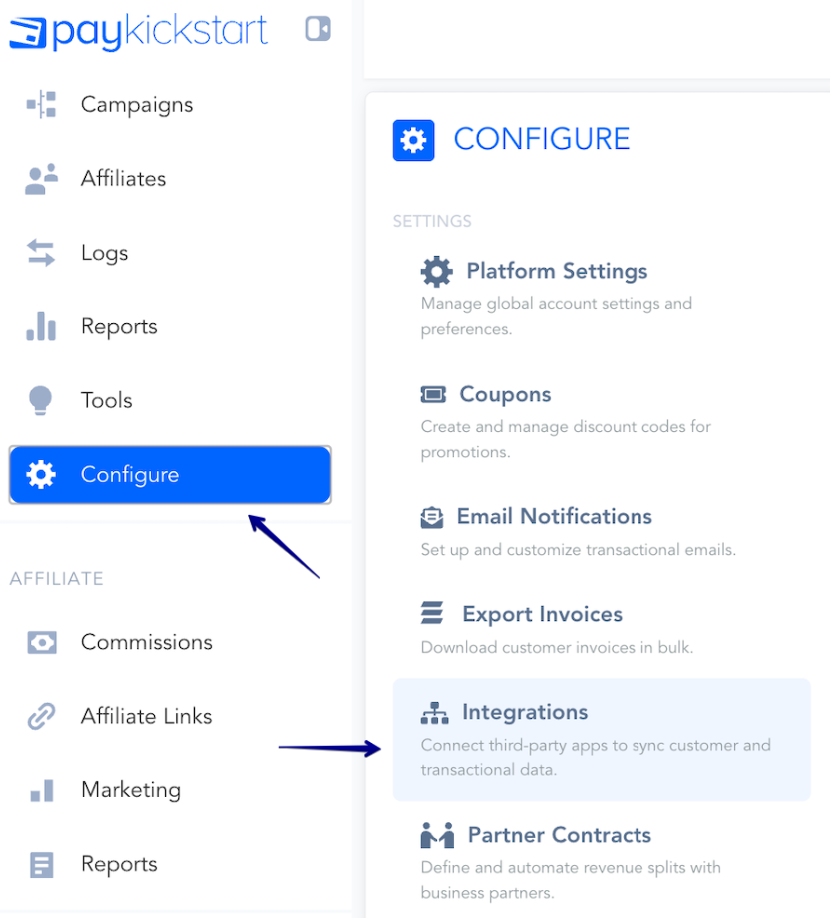
First, you’ll need to integrate on your main integration page.
Inside the Integrations menu, make sure to click on the Available tab.
Then find the CRM category in the filter, and scroll down to locate HubSpot.
You can also search for HubSpot directly within the Search field:
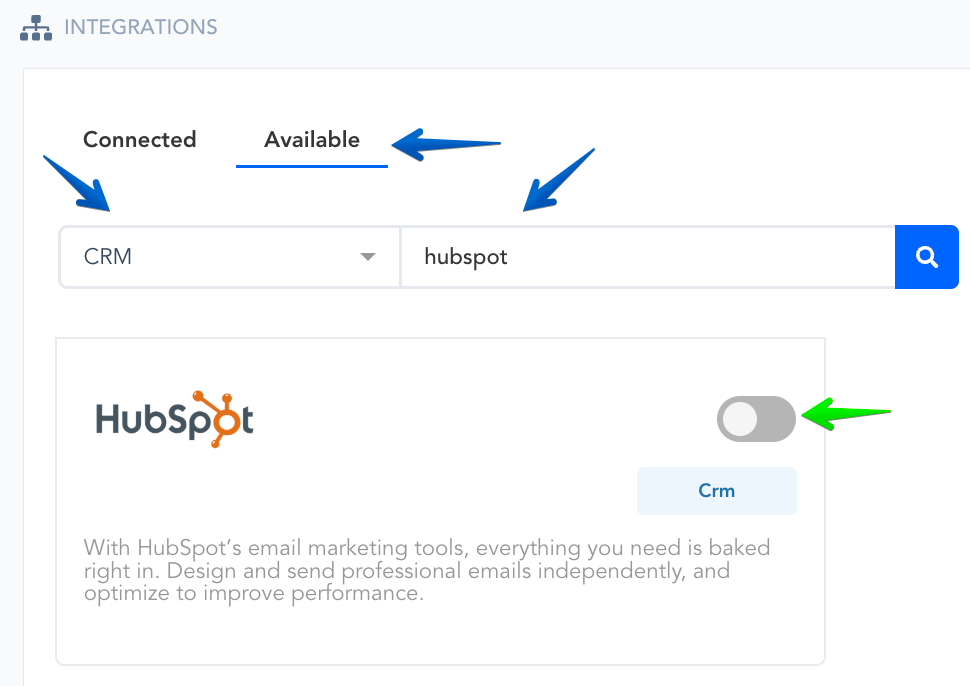
Enable HubSpot by clicking the toggle switch.
Step 2: Adding the API Key and Authorizing the HubSpot integration
Step 2: Adding the API Key and Authorizing the HubSpot integration
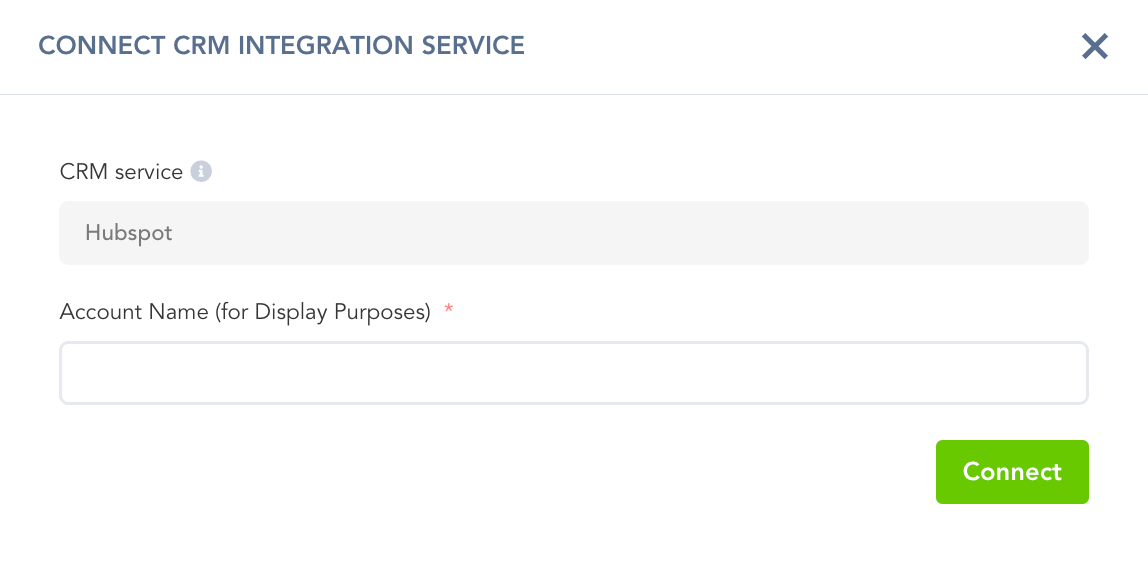
Enter your Account Name (for display purposes).
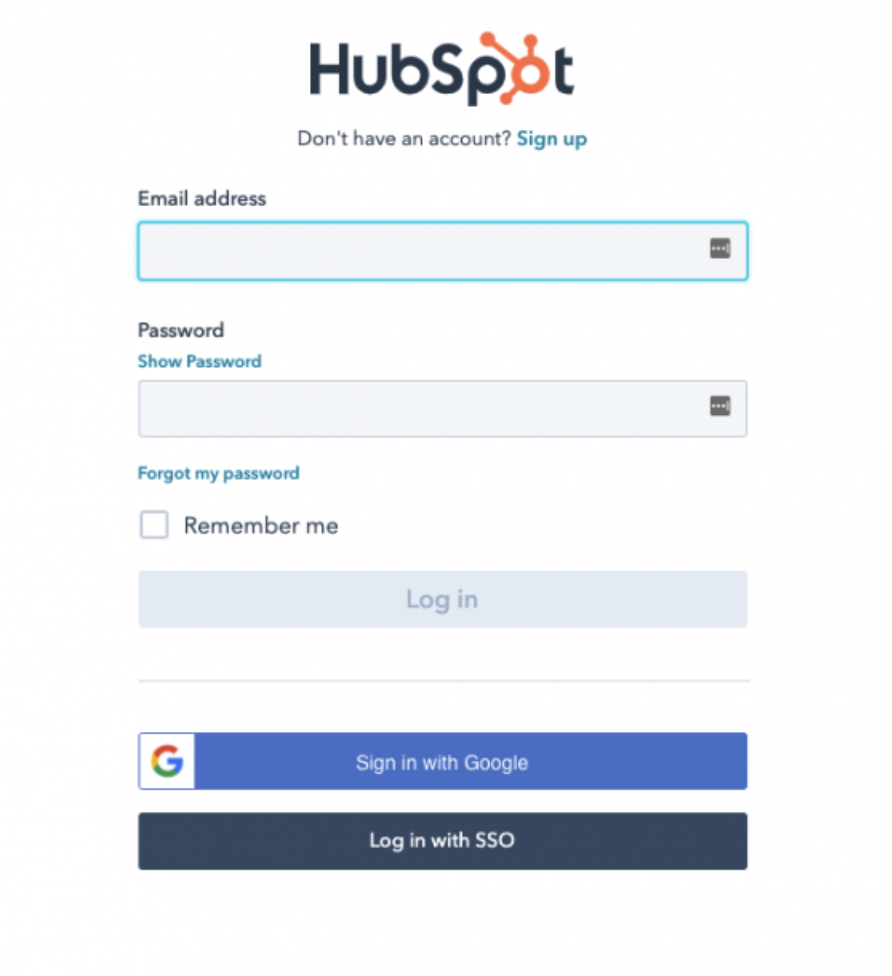
You will be redirected to HubSpot, where you can log in first to then confirm your integration and connect your PayKickstart account:
Once logged in, choose the account you wish to integrate with.
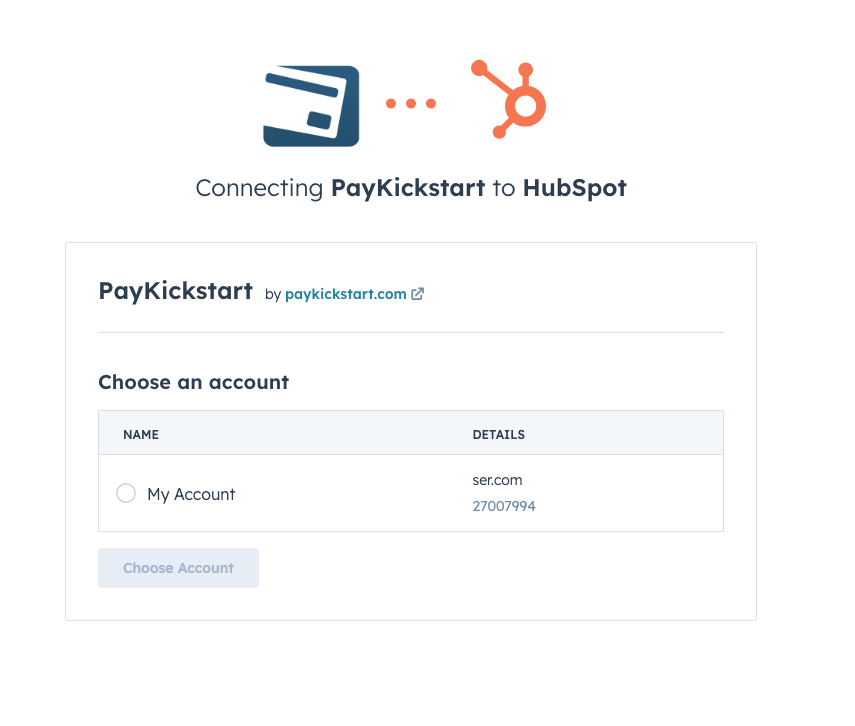
You will then be redirected to a page where you can confirm your connection by clicking on Connect Now.
Step 3: Creating an Automation Trigger for your Product(s)
Step 3: Creating an Automation Trigger for your Product(s)
After connecting your account, you must set up a Trigger to tell PayKickstart when to send customer information to HubSpot.
In the PayKickstart dashboard, go to Configure and select Triggers →
https://app.paykickstart.com/vendor/configure/triggers
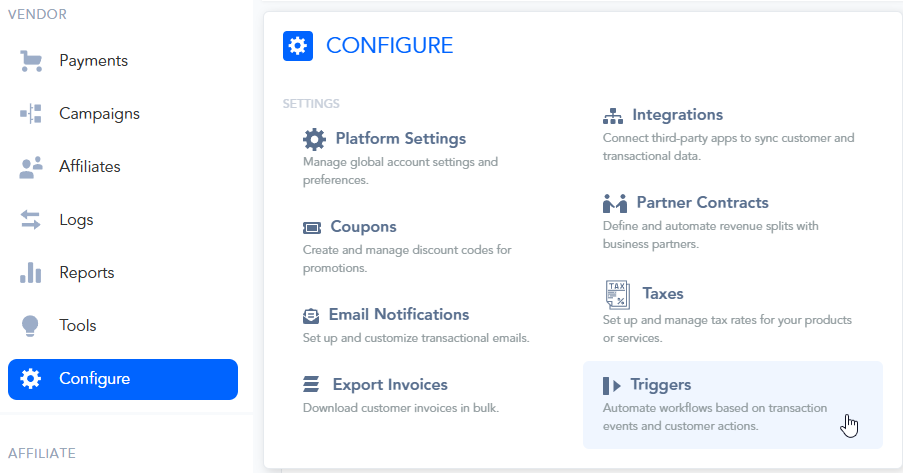
Click the + New Trigger button to create a new rule.

Configure the Trigger settings as follows:
Status:
First, toggle the switch at the top to make the trigger ACTIVE.Trigger Name:
Give your trigger a descriptive name so you can easily identify it later
(e.g., "Product 1 - New Sale to HubSpot").
Select Event(s):
Choose the event that will fire this trigger.
For adding new customers, a New sale is the most common choice.
Please note:
Available event options will show clearly only after saving your first trigger.
We recommend choosing the New Sale event when setting up the integration for the first time, as it would trigger with any new transaction that is created for the product.
For HubSpot, the currently available and supported events are:
New Sale - triggers when a new transaction is created for the product
New Trial - triggers when a new trial is started for the product
Refund - triggers when a refund is issued to the customer, for the specific product
Subscription Cancellation - triggers when a Subscription is cancelled, for the product
Pending Cancellation - triggers when choosing to cancel the subscription at the end of the billing period, instead of immediately
Cart Abandonment - triggers 15 minutes after the checkout page has been abandoned
Subscription Changed - triggers whenever the subscription’s plan has been changed to a different one
IF Condition (The Rule):
This defines the variable that must be included for the trigger to run.
Important: The IF condition must be set to a Product, for the integration to function.
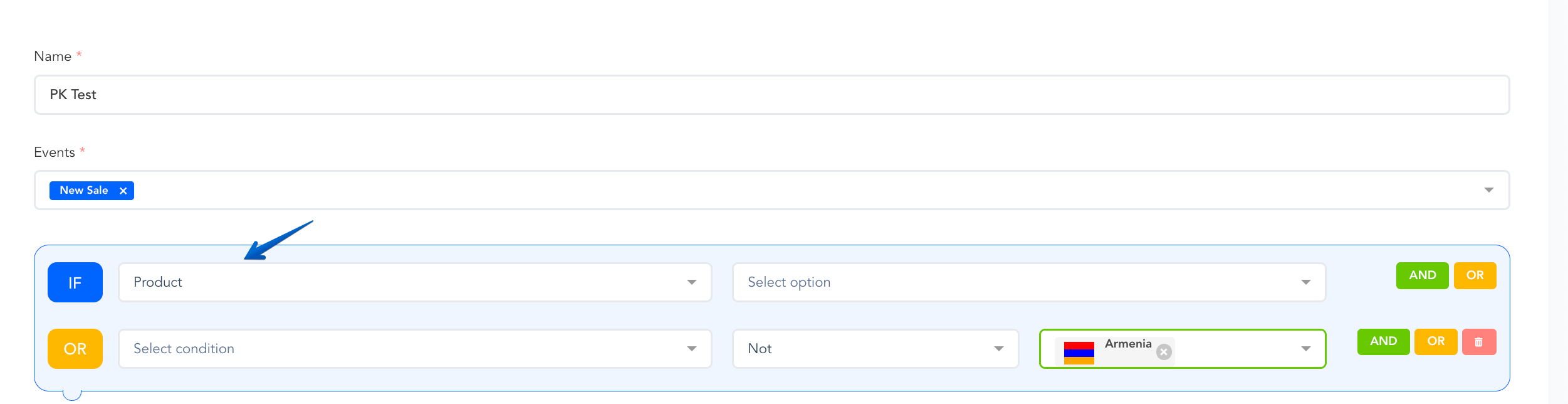
Best Practice Use Case:
We recommend creating a separate trigger for each product.
This makes it easier to manage and troubleshoot specific product integrations if needed, rather than having 1 trigger where all products are selected.
THEN Action (The Result):
This defines what will happen when the IF condition is met.
Please ensure that you have your Lists and Tags created in your HubSpot account.
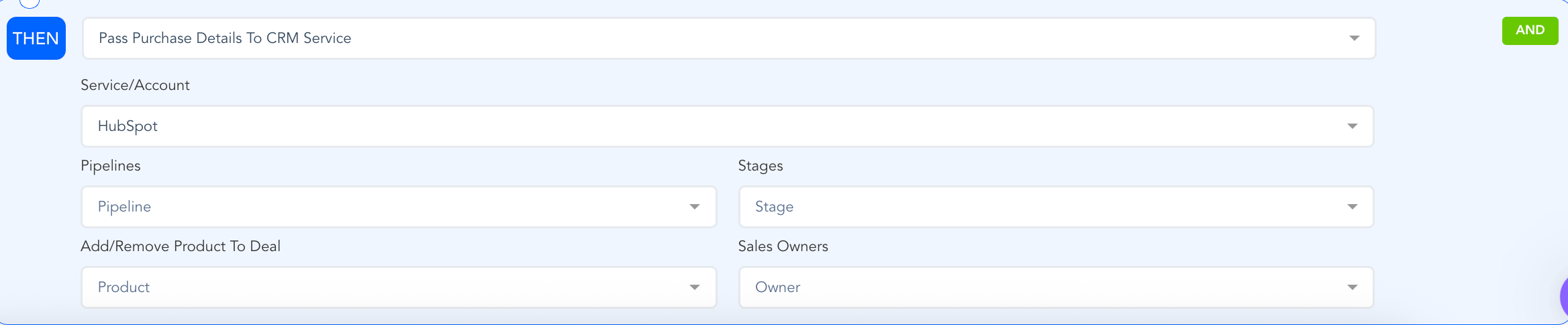
CRM Service: Your HubSpot CRM account.
Pipeline: The pipeline in HubSpot you want to add the opportunity to.
Stage: The stage of the pipeline you want to add the opportunity to.
Add/Remove Product to Deal(Optional): This allows you to assign a HubSpot product to the opportunity on the action trigger.
Note:
You must first set up your Pipeline, Stages, and HubSpot products in HubSpot CRM before setting up the integration in PayKickstart.
Once you have configured the rule, click the Update Trigger button to save your automation.
After saving the product settings, PayKickstart will now communicate with HubSpot and pass new customer events related to the triggers, which would then perform an action using the CRM integration to add customers to pipelines and stages, as well as move them around as needed, automatically.
Was this helpful?
Still need help? Ask the team